Home -> Browse
-

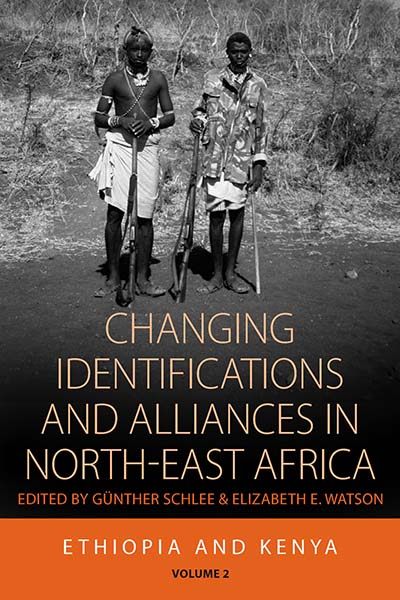
Changing Identifications and Alliances in North-east Africa
Volume I: Ethiopia and Kenya
Schlee, G. & Watson, E. E. (eds)
Forms of group identity play a prominent role in everyday lives and politics in northeast Africa. Case studies from Sudan, Ethiopia, Uganda, and Kenya illustrate the way that identities are formed and change over time, and how local, national, and international politics are interwoven. Specific attention is paid to the impact of modern weaponry, new technologies, religious conversion, food and land shortages, international borders, civil war, and displacement on group identities. Drawing on the expertise of anthropologists, historians and geographers, these volumes provide a significant account of a society profoundly shaped by identity politics and contribute to a better understanding of the nature of conflict and war, and forms of alliance and peacemaking, thus providing a comprehensive portrait of this troubled region.
Subjects: Peace and Conflict Studies Anthropology (General)
Areas: Africa Middle East & Israel
-
Irish/ness Is All Around Us
Language Revivalism and the Culture of Ethnic Identity in Northern Ireland
Zenker, O.
Focusing on Irish speakers in Catholic West Belfast, this ethnography on Irish language and identity explores the complexities of changing, and contradictory, senses of Irishness and shifting practices of 'Irish culture' in the domains of language, music, dance and sports. The author’s theoretical approach to ethnicity and ethnic revivals presents an expanded explanatory framework for the social (re)production of ethnicity, theorizing the mutual interrelations between representations and cultural practices regarding their combined capacity to engender ethnic revivals. Relevant not only to readers with an interest in the intricacies of the Northern Irish situation, this book also appeals to a broader readership in anthropology, sociology, cultural studies, history and political science concerned with the mechanisms behind ethnonational conflict and the politics of culture and identity in general.
Subjects: Anthropology (General) Peace and Conflict Studies Cultural Studies (General)
Area: Europe
-
Performing State Boundaries
Food Networks, Democratic Bureaucracy and China
Lammer, C.
Polarizing images of authoritarian, socialist or culturalist otherness compromise analyses of the Chinese state. Still, such images produce effects beyond academia when they inform performances of the boundaries between state and non-state. This book shows how performative boundary work leads to contrasting judgements that decide about support and access to resources. In an ecological village in Sichuan, citizen participation in food networks and bureaucracy signaled Western liberalism, Maoism or traditional rural culture for different audiences. Attention to the multiplicity of performed state boundaries helps China studies and political anthropology to understand such diverging classifications – and how they sometimes co-exist without causing tensions.
Subjects: Political and Economic Anthropology Anthropology (General)
Area: Asia
-
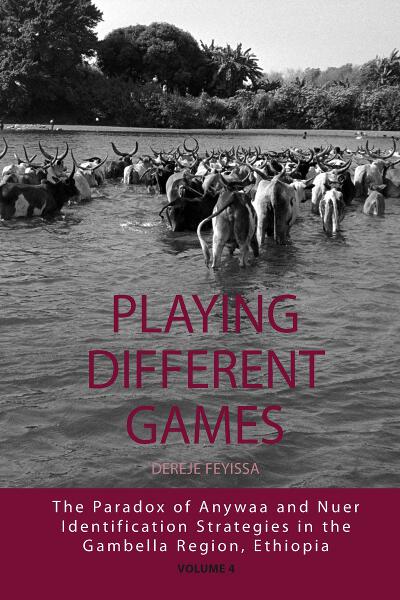
Playing Different Games
The Paradox of Anywaa and Nuer Identification Strategies in the Gambella Region, Ethiopia
Feyissa, D.
Focusing on ethnicity and its relation to conflict, this book goes beyond sterile debates about whether ethnic identities are ‘natural’ or ‘socially constructed’. Rather, ethnic identity takes different forms. Some ethnic boundaries are perceived by the actors themselves as natural, while others are perceived to be permeable. The argument is substantiated through a comparative analysis of ethnic identity formation and ethnic conflict among the Anywaa and the Nuer in the Gambella region of western Ethiopia. The Anywaa and the Nuer are not just two ethnic groups but two kinds of ethnic groups. Conflicts between the Anywaa and Nuer are explained with reference to three variables: varying modes of identity formation, competition over resources and differential incorporation into the state system.
Subjects: Peace and Conflict Studies Anthropology (General)
Area: Africa
-
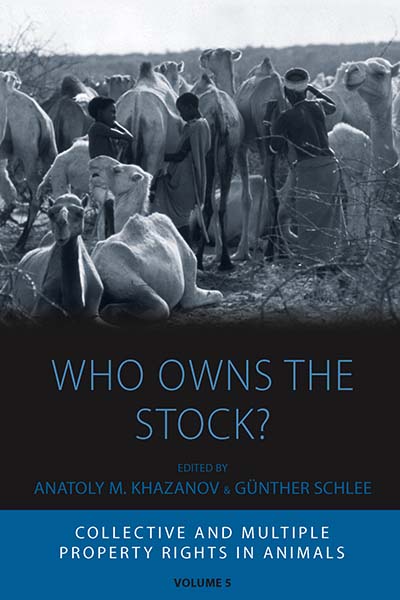
Who Owns the Stock?
Collective and Multiple Property Rights in Animals
Khazanov, A. M. & Schlee, G. (eds)
The issue of collective and multiple property rights in animals, such as cattle, camels or reindeers, among pastoralists has never been a subject of special cross-cultural and comparative study. Focusing on pastoralist societies in East and West Africa, the Far North and Siberia, and the Eurasian steppes, this volume addresses the issue of property rights and the changes these societies have undergone due to the direct or indirect influence of modernization and globalization processes. The contributors also investigate the interplay of older sets of rights and modern marketing policies; political, ecological and economic effects of collectivization and de-collectivization; the existence of collective and private property in the Soviet Union and its successor states; state taxation and destocking measures in African dry lands; and the effects of quarantine, as well as import and export regulations. The rich and well-researched ethnographic, historical, and economic data in these chapters provides new theoretical insights into the matter of property rights in animals.
Subjects: Political and Economic Anthropology Anthropology (General)
Areas: Africa Asia