Home -> Browse
-

Performing State Boundaries
Food Networks, Democratic Bureaucracy and China
Lammer, C.
Polarizing images of authoritarian, socialist or culturalist otherness compromise analyses of the Chinese state. Still, such images produce effects beyond academia when they inform performances of the boundaries between state and non-state. This book shows how performative boundary work leads to contrasting judgements that decide about support and access to resources. In an ecological village in Sichuan, citizen participation in food networks and bureaucracy signaled Western liberalism, Maoism or traditional rural culture for different audiences. Attention to the multiplicity of performed state boundaries helps China studies and political anthropology to understand such diverging classifications – and how they sometimes co-exist without causing tensions.
Subjects: Political and Economic Anthropology Anthropology (General)
Area: Asia
-
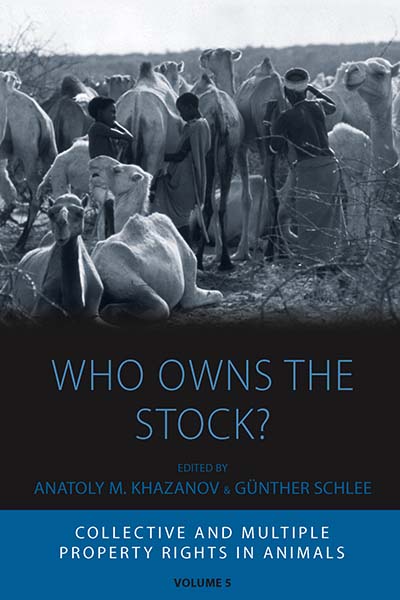
Who Owns the Stock?
Collective and Multiple Property Rights in Animals
Khazanov, A. M. & Schlee, G. (eds)
The issue of collective and multiple property rights in animals, such as cattle, camels or reindeers, among pastoralists has never been a subject of special cross-cultural and comparative study. Focusing on pastoralist societies in East and West Africa, the Far North and Siberia, and the Eurasian steppes, this volume addresses the issue of property rights and the changes these societies have undergone due to the direct or indirect influence of modernization and globalization processes. The contributors also investigate the interplay of older sets of rights and modern marketing policies; political, ecological and economic effects of collectivization and de-collectivization; the existence of collective and private property in the Soviet Union and its successor states; state taxation and destocking measures in African dry lands; and the effects of quarantine, as well as import and export regulations. The rich and well-researched ethnographic, historical, and economic data in these chapters provides new theoretical insights into the matter of property rights in animals.
Subjects: Political and Economic Anthropology Anthropology (General)
Areas: Africa Asia